
Here's the situation I was trying to fix.
I kept seeing job postings that described work I already did—but in language I didn't recognize. "Own the reporting cadence for a cross-functional stakeholder group." That was my Tuesday. "Drive adoption of data-informed decision-making." Also my Tuesday, described by someone from a different planet.
I could do the work. I couldn't prove it, because I didn't have the vocabulary, and the vocabulary is what gets you past the screen.
So I built a mapping exercise. Its job is to translate what you actually do into the language the market is buying—without inflating anything, and without turning your resume into a pile of keywords. This is the third piece in Career Move Lab, and it pairs with the evidence work from the resume rebuild.
Why the Translation Fails
Three reasons, and they're structural.
The Market Doesn't Buy Tasks; It Buys Outcomes
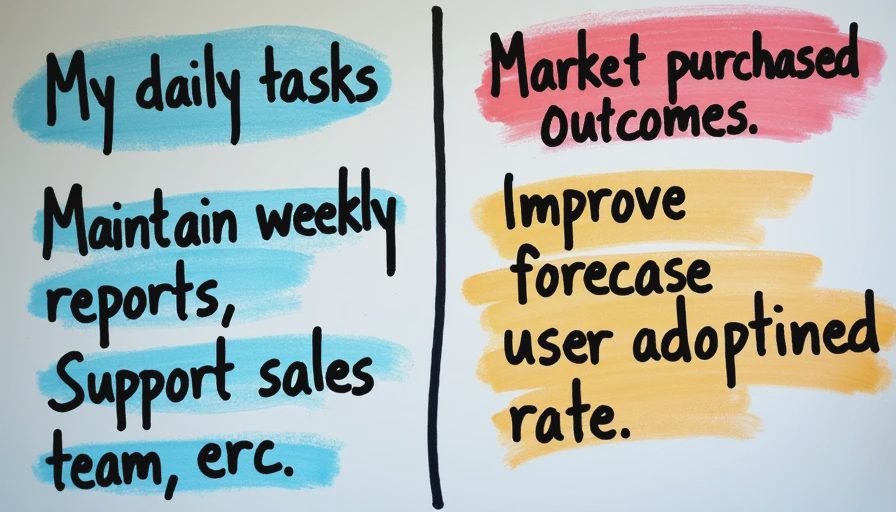
Your job description lists tasks: "manage the weekly report," "support the sales team," "maintain the dashboard." The market buys outcomes: "reduce reporting time," "improve forecast accuracy," "increase adoption." The gap between the two is where most professionals disappear.
You're not underqualified. You're un-translated.
Job Postings Are Written in a Specific Dialect
Postings are written by hiring managers, filtered through HR, and often copied from templates. The result is a dialect with recurring phrases that don't map cleanly to any single real job. "Cross-functional collaboration" can mean anything from running a weekly standup to coordinating a matrixed org.
If you read a posting literally, you'll either dismiss it as "not me" or apply without addressing what it's actually asking for. Neither works.
AI Makes the Keyword Matching Worse
The default move is to paste a job description and your resume into a model and ask it to match keywords. This produces a document that echoes the posting back at itself. It gets past automated screens and fails the human one, because the reader can tell the substance isn't there.
The fix isn't better keyword matching. It's a real mapping: this experience → that skill, with evidence.
The Workflow
Five steps. The model does two. You do three, and they're the ones that matter.
Step 1: List What You Actually Did, in Plain Language
Forget the market for a moment. Write down, in your own words, the recurring things you do. Not the job title, not the responsibilities section of your description—the actual week.
What do you produce?
What decisions do you influence or make?
What do you unblock?
What gets better because you're there?
Be specific and unglamorous. "I clean up the weekly data before it goes to the director" is a real entry. So is "I'm the person people ask when they can't find something."
Aim for ten to twenty items. This is the raw material.
Step 2: Have the Model Surface the Underlying Skills
Now the translation. Give the model your plain-language list and ask it to name the transferable skills each item implies—with a caution.
A prompt that works:
Below is a list of things I actually do at work, in my own words. For each, name the underlying professional skill or capability it demonstrates, using language a hiring manager would recognize. Do not embellish. Do not add skills that aren't supported by the item. Where an item is ambiguous, say so instead of guessing.
The caution is the whole point: you're asking for translation, not inflation. The model should name what's there, not invent a more impressive version.
A good output for "I clean up the weekly data before it goes to the director":
Data quality management; stakeholder reporting; attention to detail under deadline; understanding of what a senior audience needs.
That's real. It's the same job, described in the market's terms.
Step 3: Do the Honest Check
This is the step that keeps the mapping true. Read the model's output and for each named skill, ask:
Could I defend this in an interview? If a hiring manager asked for an example, do I have one?
Is this a core part of my work, or a one-time thing? A skill you used once is not a skill you have. Be honest about the difference.
Would my manager agree? If you showed this to your current manager, would they nod, or would they raise an eyebrow?
Cross out anything that fails. The mapping only works if everything in it is true—because the next step puts it in front of someone who'll probe.
Step 4: Map to the Market's Language
Now take the verified skills and find how the market names them. This is where you read actual job postings—the ones you'd want, at companies you'd want. Not to match keywords, but to learn the dialect.
For each of your verified skills, find two or three postings that name something similar. Note the specific phrasing. "Stakeholder reporting" might be "executive communication" in one posting and "business partnering" in another. Same work, different words.
The output is a two-column list: what I do on the left, how the market says it on the right—with the specific phrasing you found.
The model can help here too, but cautiously. Ask it to suggest how a given skill is typically phrased in job postings for a given role. Then verify against actual postings. The model's suggestions are hypotheses; the postings are evidence.
Step 5: Build the Gap List
The final step is the most useful, and the one people skip.
Compare your verified skills to the postings you'd want. You'll find three kinds of things:
Skills you have and can prove. These go on the resume and into interviews, phrased in the market's language.
Skills you have but can't prove. These need evidence—a project, a portfolio piece, a measurable outcome. This is the most common gap and the most fixable.
Skills you don't have. These need a plan, or a decision to apply anyway and learn on the job.
The gap list is what turns the mapping from a translation exercise into an action plan. It tells you exactly what to build next, in the market's terms.
The Before and After
Same job, two descriptions.
Before (in your own words):
I clean up the weekly data before it goes to the director. I also answer questions from the sales team when they can't find numbers. And I've been the person who onboards new analysts on our reporting system.
After (mapped to the market):
Stakeholder reporting and data quality: Own the weekly reporting pipeline end-to-end, ensuring accuracy and timeliness for executive review.
Business partnering: Serve as the primary data resource for the sales team, translating ad-hoc questions into usable answers.
Enablement and onboarding: Train new analysts on the reporting system and internal data standards.
Same three things. But the second version could be read by a hiring manager and matched to a posting. The first version couldn't—not because the work was different, but because the language was.
What Still Needs You
The parts of this mapping that can't be automated:
Honesty about what you actually do. The model can only translate what you give it. If your input list is aspirational, the output is fiction, and you'll get caught in the first interview.
The verification pass. Deciding which skills you can defend is a judgment about your own experience. The model can't know whether you have a story behind a skill.
Reading the market. Which postings you take seriously, and which phrasings matter for the roles you want, is a judgment about your direction. The model doesn't know where you're going.
Deciding what to do about gaps. Some gaps are worth closing. Some aren't. Some mean you should apply anyway. That's a call about your time and priorities, not a data question.
Keeping it current. The market's language shifts. A mapping done once goes stale. Revisiting it every few months is the discipline that keeps it useful.
The model translates. You verify, aim, and act.
The One-Evening Version

If you want to test this before committing to a full map:
20 min: List five things you actually do, in plain language.
10 min: Ask the model to name the underlying skills for each. Caution it against embellishment.
20 min: Do the honest check. Cross out anything you couldn't defend.
30 min: Find two real postings for a role you'd want. Note how they phrase the skills you have.
20 min: Write your gap list—have, have-not-proven, don't-have.
One evening. Five skills translated, one gap list, and a much clearer sense of how your actual work reads in the market's language.
The mapping isn't the goal. It's the step that makes everything else—the resume, the interview, the application—start from a true and legible position.
Better work first. More options next.
Make the workflow earn its place.

No feedback yet — submit the first.