Here’s the situation I was trying to fix: career questions often start with a job title and end with a vague description. If you are asking what do electrical engineers do, the short answer is that they design, test, improve, and maintain systems that use electricity. The longer answer is more useful because the work can look very different in power generation, consumer electronics, manufacturing, vehicles, telecommunications, or building systems.
An electrical engineer might spend the morning reviewing a circuit board, the afternoon talking with a manufacturer, and the next day analyzing a failed component. The common thread is structured problem-solving. You are turning requirements into a working system, then proving that system is safe, reliable, affordable, and practical to build.
What do electrical engineers do on a normal workday?
A typical day depends on the industry and seniority, but most roles combine technical design with communication. An engineer may read specifications, calculate current and voltage, select components, create schematics, simulate performance, or review test results. They also spend significant time writing design notes, updating project schedules, and explaining tradeoffs to managers, technicians, customers, and suppliers.
For example, an engineer working on a medical device could select a sensor, design signal-conditioning circuitry, and help verify that the device produces accurate readings. Someone in industrial automation might program or review motor controls, investigate equipment downtime, and recommend a safer wiring layout. In a power utility, the work may involve substations, transmission equipment, protection systems, and load planning rather than small circuit boards.
That mix answers what do electrical engineers do better than a list of tools. The job is not simply sitting alone and calculating formulas. It is a loop of understanding the requirement, building a solution, testing the result, finding weaknesses, and documenting the next decision.
The main areas of electrical engineering
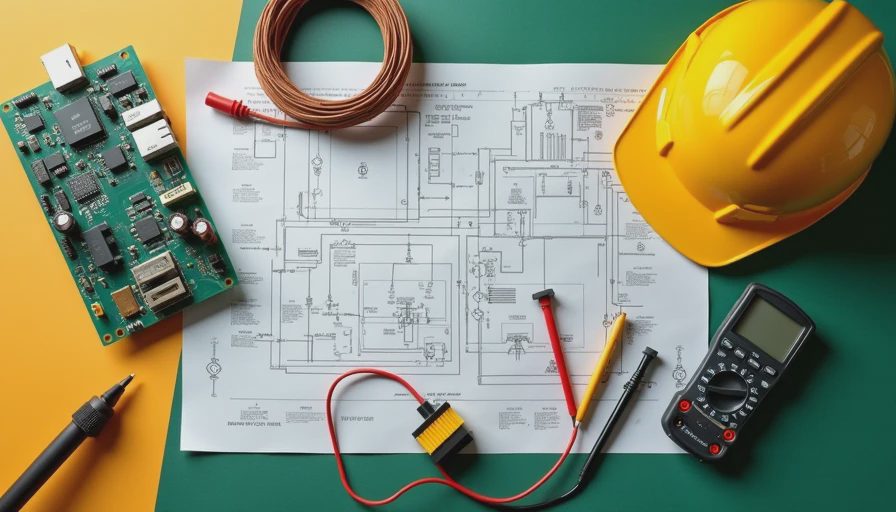
Electrical engineering is a broad field, so the title does not point to one single career. Power engineers work with generation, distribution, renewable energy, batteries, and electrical grids. Electronics engineers design components and devices such as sensors, control boards, audio equipment, and embedded systems. Telecommunications engineers work with wireless networks, fiber systems, antennas, and signal transmission.
Other paths include control systems, robotics, aerospace, automotive engineering, computer hardware, semiconductor design, and building electrical systems. A controls engineer could tune a feedback loop for a robotic arm, while an automotive engineer might help develop battery management software and high-voltage safety systems for an electric vehicle.
When researching what do electrical engineers do, look at the industry before judging the career. The daily experience in a factory can be hands-on and fast-moving. A semiconductor role may involve detailed simulations and clean-room processes. A consulting engineer may spend more time on drawings, client meetings, building codes, and project coordination.
This variety is a practical advantage for someone who likes technical work but does not want to be locked into one product category. Skills in circuit analysis, systems thinking, testing, and technical documentation can transfer across several industries.
Skills and tools that matter
Electrical engineers need a foundation in mathematics, physics, and electrical theory, but workplace success depends on more than technical knowledge. You need to define a problem clearly before reaching for a solution. You also need to compare cost, reliability, safety, manufacturing limits, maintenance, and delivery time.
Common tools include computer-aided design software, circuit simulation platforms, oscilloscopes, multimeters, programmable test equipment, spreadsheets, and programming languages such as Python, C, or MATLAB. The specific software changes by employer. The durable skill is knowing how to use evidence to make a design decision and how to communicate that decision so another person can review it.
A strong engineer also develops habits around version control, change management, testing, and documentation. A design that works once on a workbench is not necessarily ready for production. It must perform across temperature ranges, manufacturing variation, electrical noise, and expected use conditions.
That is the practical answer to what do electrical engineers do: they manage both the technical details and the consequences of those details. A small component choice can affect product cost, safety certification, repair time, and customer experience.
Education, entry-level work, and career growth
Most electrical engineers begin with a bachelor’s degree in electrical engineering or a closely related field. Coursework commonly includes circuits, electromagnetics, digital logic, signals and systems, control theory, programming, and power systems. Internships, lab projects, robotics teams, and personal electronics projects can make those concepts easier to explain in an interview.
Entry-level engineers often support senior staff by running tests, updating drawings, analyzing failures, preparing reports, and helping move a design into production. Over time, they may become technical specialists, project leaders, systems engineers, engineering managers, or consultants. Some pursue a Professional Engineer license, particularly in public infrastructure and building-related work; the requirements depend on the state and the type of practice.
Pay varies widely by location, experience, industry, and clearance or licensing requirements. Entry-level roles often land in a solid professional salary range, while experienced engineers in specialized fields can earn substantially more. Rather than choosing a field based only on a salary listing, compare the work environment, learning curve, travel expectations, and amount of hands-on work.
If you are still asking what do electrical engineers do because you are considering a transition, read five real job postings. Mark repeated requirements, then build one small project that demonstrates a missing skill. A documented power supply, sensor system, or motor-control project is more useful than a vague claim that you are interested in engineering.

How AI changes the work without replacing judgment
AI can help electrical engineers search technical documents, summarize test logs, draft routine documentation, generate starter code, and organize failure data. Those uses can reduce administrative effort, especially when an engineer has hundreds of test results or a large requirements document to review.
The boundaries matter. An AI-generated circuit suggestion still needs simulation, measurement, safety review, and compliance checks. A summary can omit an important exception. Code can look clean while handling a dangerous edge case incorrectly. Engineers remain responsible for deciding whether a design meets requirements and whether the evidence supports release.
A small workflow worth testing is a failure-review assistant. Export non-sensitive test notes, ask an approved tool to group recurring symptoms, then verify every group against the original records. Track three measures: review time, missed issues, and correction effort. If the workflow saves twenty minutes but creates an hour of checking, it has not earned a permanent place in the process.
This is where an engineering skill can become a credible side offer later. A professional who learns to structure test documentation, requirements reviews, or equipment-maintenance records could eventually package that capability for a small manufacturer. Better work first. More options next.
A one-week way to explore the field
You do not need to enroll in a program before learning whether the work fits. Start with a small, concrete experiment. Choose a household or hobby problem, such as monitoring room temperature or controlling a small motor. Define the input, output, power source, safety limits, and success measurement. Sketch the system, research the components, build or simulate a basic version, and record what failed.
Then read ten job descriptions from companies in different sectors. Note whether each role emphasizes design, testing, field support, manufacturing, software, compliance, or customer communication. Compare those requirements with your experiment and identify one gap to study next.
The useful answer to what do electrical engineers do is not merely “work with electricity.” They turn physical requirements into tested systems and make tradeoffs that affect real products, buildings, machines, and communities. If that combination of analysis, building, and accountability sounds engaging, use one small project to gather evidence before making a major career decision.
Make the workflow earn its place.





No feedback yet — submit the first.